Explore integrated security solutions that leverage PSIM software for unified command and control of security operations.
Explore integrated security solutions that leverage PSIM software for unified command and control of security operations.
Integrated Security Solutions with PSIM Software Unified Command and Control
Understanding PSIM Software What is Physical Security Information Management
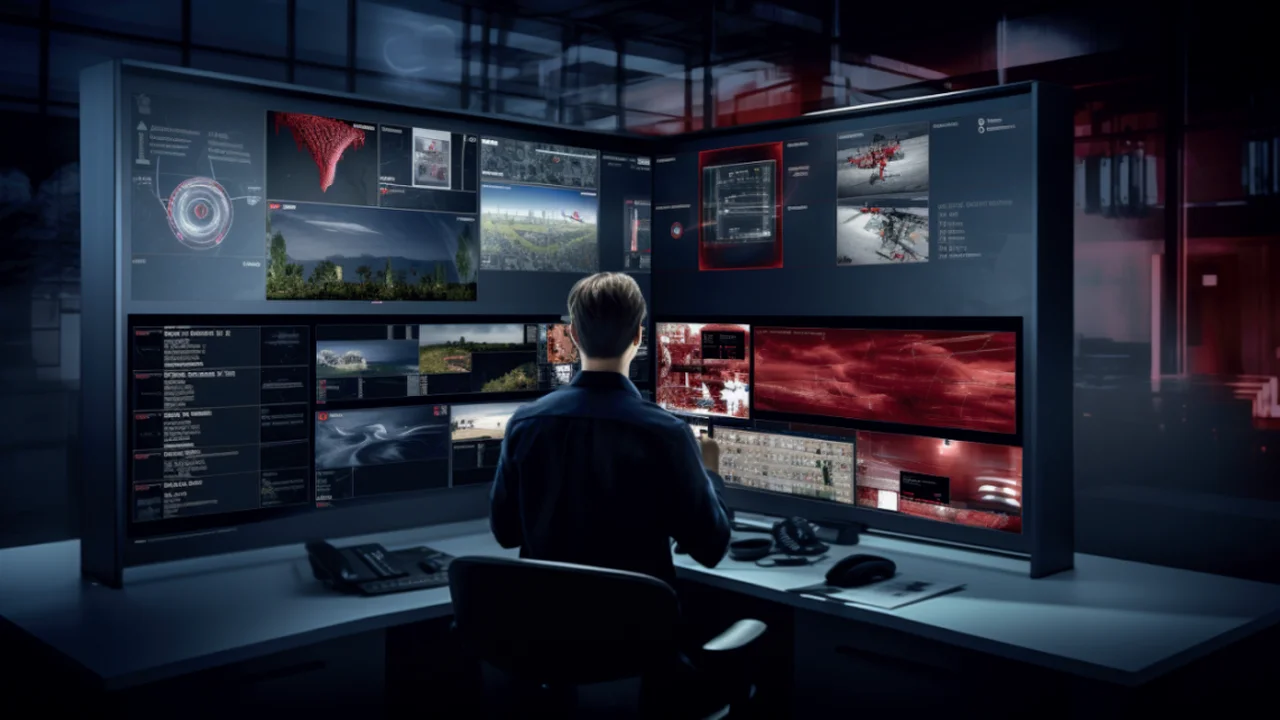
Alright, let's dive deep into something super important for anyone serious about security, especially in big, complex environments: PSIM software. PSIM stands for Physical Security Information Management. Now, that's a mouthful, but what it really means is bringing all your different security systems together into one single, easy-to-manage platform. Think about it: most large organizations have a bunch of separate security tools. You've got your CCTV cameras, access control systems, alarm panels, maybe even fire detection, perimeter security, and building management systems. Traditionally, these all operate in their own silos. An alarm goes off here, a camera sees something there, and a door is forced open somewhere else. Your security team has to jump between different screens, different software interfaces, and try to piece together what's happening. It's inefficient, slow, and frankly, pretty stressful in a real emergency.
That's where PSIM comes in. It's like the brain that connects all these disparate systems. It collects data from every single one of them, analyzes it, correlates events, and then presents a unified, real-time picture to your security operators. Instead of seeing a dozen different alerts on a dozen different monitors, they see one consolidated view, often with step-by-step instructions on how to respond to specific incidents. This isn't just about convenience; it's about dramatically improving response times, reducing human error, and ultimately, making your security operations far more effective. It's about moving from reactive security to proactive, intelligent security management.
Key Benefits of PSIM Integration Enhanced Security Operations and Efficiency
So, why bother with PSIM? The benefits are pretty compelling, especially for organizations with a lot to protect. First off, you get a truly unified view. Imagine a single dashboard where you can see live camera feeds, access control events, alarm statuses, and even environmental sensor data, all at once. This eliminates the need for operators to constantly switch between applications, which saves precious time during an incident. This unified view also helps in correlating events. For example, if an access control system flags an unauthorized entry, the PSIM system can automatically pull up the nearest camera feed, show the person's last known location, and even trigger a lockdown procedure, all without manual intervention.
Secondly, PSIM significantly improves incident response. Because the system provides a clear, consolidated picture and often includes pre-defined standard operating procedures (SOPs) for various scenarios, operators know exactly what to do. This reduces panic, ensures consistent responses, and minimizes the impact of security breaches. Think about a fire alarm: the PSIM can automatically unlock emergency exits, shut down HVAC systems, display evacuation routes on digital signage, and notify emergency services, all while providing real-time updates to your security team.
Third, there's a huge boost in operational efficiency. With automation handling routine tasks and intelligent correlation reducing false positives, your security personnel can focus on genuine threats. This means fewer staff needed for monitoring, or the existing staff can be deployed more strategically. Plus, PSIM systems often include robust reporting and auditing capabilities. You can easily generate reports on incident types, response times, and system performance, which is invaluable for compliance, training, and continuous improvement of your security posture.
Finally, PSIM offers scalability and flexibility. As your organization grows or your security needs evolve, you can easily integrate new systems and technologies into your existing PSIM platform. This future-proofs your investment and ensures your security infrastructure can adapt to new challenges without a complete overhaul.
Top PSIM Software Solutions for Comprehensive Security Management
Alright, let's talk about some of the big players in the PSIM world. These are the companies that are really pushing the boundaries of integrated security. Keep in mind, PSIM solutions are typically enterprise-grade, meaning they're designed for large organizations with complex security needs, so pricing can vary wildly based on the scale of deployment and features required. It's not like buying a consumer-grade security camera.
CNL Software IPSecurityCenter PSIM Platform
CNL Software is often considered a leader in the PSIM space, and their IPSecurityCenter platform is a prime example of a robust, enterprise-level solution. It's known for its incredible flexibility and ability to integrate with a vast array of disparate security and business systems. We're talking about hundreds of integrations out of the box, from major CCTV brands like Axis, Bosch, and Hikvision, to access control systems like LenelS2, Genetec, and Honeywell, and even fire alarms, building management systems, and IT networks.
* Key Features: IPSecurityCenter offers a highly customizable user interface, advanced event correlation engines, dynamic standard operating procedures (SOPs), and powerful reporting tools. It excels at providing a common operating picture (COP) across multiple sites or even global operations. Its workflow engine allows for automated responses to specific events, ensuring consistent and rapid action.
* Use Cases: This platform is ideal for critical infrastructure (airports, utilities, government facilities), large corporate campuses, smart cities, and major transportation hubs. Anywhere you have a complex mix of security technologies and a need for centralized command and control, IPSecurityCenter shines.
* Pricing: As a high-end enterprise solution, pricing for CNL Software's IPSecurityCenter is typically custom-quoted based on the number of integrations, devices, users, and specific features required. Expect a significant investment, often in the tens or hundreds of thousands of dollars, plus ongoing maintenance and support contracts. It's not a plug-and-play solution; it requires professional design and implementation.
Qognify Ocularis and Situator PSIM Solutions
Qognify, formerly NICE Security, offers a powerful suite of security solutions, with Ocularis focusing on video management and Situator as their dedicated PSIM platform. Situator is particularly strong in incident management and response, providing a comprehensive framework for handling security events from detection to resolution.
* Key Features: Situator is renowned for its advanced incident management capabilities, including dynamic workflows, automated task assignment, and real-time collaboration tools for security teams. It integrates seamlessly with Ocularis VMS for powerful video analytics and forensic search. It also offers robust GIS mapping integration, allowing operators to visualize incidents on a geographical map.
* Use Cases: Qognify's solutions are widely adopted in public safety, transportation, critical infrastructure, and large enterprise environments. Their focus on incident management makes them particularly valuable for organizations that need highly structured and auditable response protocols.
* Pricing: Similar to CNL Software, Qognify's PSIM solutions are enterprise-grade. Pricing is project-specific, depending on the scale of deployment, number of integrated systems, and required modules. Expect a substantial investment, with implementation and licensing costs varying widely based on complexity.
Vidsys Converged Security and Information Management CSIM
Vidsys takes a slightly different approach, often referring to their platform as CSIM (Converged Security and Information Management). This emphasizes their ability to integrate not just physical security systems but also IT systems, business applications, and even social media feeds, providing an even broader operational picture. They focus on real-time situational awareness and intelligent decision-making.
* Key Features: Vidsys CSIM offers a highly intuitive graphical user interface, advanced event correlation, and a powerful rules engine for automating responses. It's known for its open architecture, making it highly adaptable to various systems. Their platform also emphasizes data visualization and analytics, helping organizations understand trends and proactively mitigate risks.
* Use Cases: Vidsys is a strong contender for government agencies, defense, large corporations, and organizations that require a truly converged view of security and operational data. Their ability to integrate IT and physical security makes them unique for cyber-physical security challenges.
* Pricing: Vidsys CSIM is another enterprise-level solution with custom pricing. The cost will depend on the number of integrations, data points, users, and the complexity of the desired workflows. Budget for a significant investment, including licensing, implementation, and ongoing support.
SureView Systems Immix Command Center
SureView Systems' Immix Command Center is a widely used PSIM platform, particularly popular among central monitoring stations and large security operations centers (SOCs). It's designed to streamline alarm monitoring and incident response across a wide range of security systems.
* Key Features: Immix is known for its user-friendly interface, rapid integration capabilities with hundreds of security devices (CCTV, access control, alarms), and robust alarm handling features. It provides clear, actionable intelligence to operators, guiding them through incident resolution with pre-defined procedures. It's also highly scalable, supporting multiple sites and large volumes of events.
* Use Cases: Immix is an excellent choice for security monitoring centers, corporate security departments, and organizations that need to manage a high volume of security events efficiently. Its focus on alarm and video verification makes it very effective for reducing false alarms and improving response to genuine threats.
* Pricing: Immix offers more flexible pricing models compared to some of the other high-end PSIMs, sometimes including subscription-based options, especially for monitoring centers. However, for large enterprise deployments, it will still be a significant investment, with costs varying based on the number of connections, users, and features.
Genetec Security Center with Mission Control
While Genetec Security Center is primarily known as a unified security platform (VMS, access control, ANPR), their Mission Control module effectively functions as a PSIM. It takes the integrated data from Security Center and adds advanced incident management, decision support, and standard operating procedures.
* Key Features: Mission Control leverages the deep integration within the Genetec ecosystem, providing a seamless experience for operators. It offers dynamic incident workflows, automated task management, and real-time collaboration. Its strength lies in its ability to unify video, access control, and other security data within a single, powerful platform.
* Use Cases: This is ideal for organizations already using or planning to use Genetec Security Center for their core security infrastructure. It's suitable for corporate campuses, educational institutions, government facilities, and retail environments that want to enhance their incident response capabilities within a unified platform.
* Pricing: Genetec's pricing is modular. You'd typically purchase Security Center licenses (based on cameras, readers, etc.) and then add the Mission Control module. Pricing is custom-quoted and depends on the scale of your Genetec deployment and the specific Mission Control features you need. It's a premium solution, so expect a corresponding investment.
Implementing PSIM Best Practices for Successful Deployment
Okay, so you're convinced PSIM is the way to go. But implementing it isn't just about buying software and flipping a switch. It's a complex project that requires careful planning and execution. Here are some best practices to ensure a successful deployment.
First, start with a thorough assessment of your current security infrastructure and operational needs. What systems do you have? What are your biggest pain points? What incidents occur most frequently? What are your current response procedures? Understanding your existing landscape is crucial for defining the scope of your PSIM project and identifying which systems need to be integrated.
Next, define clear objectives and key performance indicators (KPIs). What do you hope to achieve with PSIM? Is it faster response times, reduced false alarms, improved compliance, or better situational awareness? Having measurable goals will help you track the success of your implementation and justify the investment.
Vendor selection is obviously critical. Don't just pick the cheapest or the most well-known. Look for a vendor with a proven track record, strong integration capabilities with your existing systems, and excellent customer support. Request demos, ask for references, and ensure their platform can truly meet your specific requirements. Consider their roadmap for future development too.
Don't underestimate the importance of a phased implementation. Trying to integrate everything at once can be overwhelming and lead to delays. Start with a pilot project, integrate a few critical systems, and get your team comfortable with the new platform. Once successful, you can gradually expand the integration to other systems and locations.
Training, training, training! Your security operators are the ones who will be using this system every day. They need comprehensive training on how to navigate the interface, interpret alerts, follow SOPs, and utilize all the features. Ongoing training and refresher courses are also essential, especially as new features are rolled out or procedures are updated.
Finally, establish a robust change management process. PSIM will likely change how your security team operates. Communicate these changes clearly, involve your team in the process, and address any concerns they might have. A smooth transition is key to user adoption and the overall success of the project. And remember, PSIM isn't a one-time setup; it requires continuous optimization and maintenance to ensure it remains effective and aligned with your evolving security needs.
Integrating PSIM with Existing Security Systems Maximizing Your Investment
The real power of PSIM comes from its ability to integrate with your existing security systems. This isn't just about connecting them; it's about making them work together intelligently. Let's break down how PSIM typically integrates with common security components.
CCTV and Video Management Systems VMS Integration
This is probably one of the most crucial integrations. When an alarm triggers, the PSIM system should automatically pull up the relevant camera feeds, often displaying multiple views of the incident area. It can also trigger PTZ (pan-tilt-zoom) cameras to focus on specific points of interest. Advanced PSIMs can even integrate with video analytics from your VMS, allowing them to receive alerts for things like loitering, object left behind, or unusual crowd behavior. This means your operators aren't just looking at a static image; they're seeing real-time, intelligent video evidence directly related to an event.
Access Control Systems ACS Integration
Integrating with access control is another cornerstone. If an unauthorized access attempt occurs, the PSIM can immediately flag it, show the person's credentials (if available), and display associated video. It can also be used to remotely lock or unlock doors, trigger a full or partial lockdown, or grant temporary access in an emergency. This level of control from a single interface is invaluable for managing building security and responding to breaches.
Alarm Monitoring Systems and Sensors Integration
This is where PSIM really shines in consolidating alerts. Instead of separate panels for fire alarms, intrusion alarms, and environmental sensors, all these alerts flow into the PSIM. The system can then prioritize them, correlate them with other events (e.g., an intrusion alarm combined with a motion sensor activation), and guide operators through the appropriate response. This reduces alert fatigue and ensures critical alarms are never missed.
Perimeter Security and Intrusion Detection Integration
For larger sites, integrating with perimeter security systems like fence sensors, ground radar, or laser barriers is essential. When a perimeter breach is detected, the PSIM can immediately pinpoint the location on a map, activate nearby cameras, and dispatch security personnel. This proactive approach helps intercept threats before they even reach the main facility.
Building Management Systems BMS Integration
Integrating with BMS allows PSIM to control environmental factors. In a fire, the PSIM can automatically shut down HVAC systems to prevent smoke spread, activate sprinklers, and control lighting for evacuation. This convergence of security and building operations creates a safer and more efficient environment.
IT and Network Security Integration
Some advanced CSIM platforms (like Vidsys) can even integrate with IT and network security systems. This is particularly relevant for cyber-physical security, where a cyberattack could have physical consequences, or vice versa. For example, a network intrusion detected by IT could trigger a physical security response if it's deemed to be targeting critical infrastructure.
By bringing all these systems together, PSIM transforms a collection of disparate tools into a cohesive, intelligent security ecosystem. It maximizes your existing investments by making them work smarter, not just harder.
Future Trends in PSIM AI Machine Learning and Predictive Analytics
The world of security is constantly evolving, and PSIM is no exception. The future of PSIM is going to be heavily influenced by advancements in artificial intelligence (AI), machine learning (ML), and predictive analytics. These technologies are moving PSIM beyond just reactive incident management to proactive threat prevention.
One major trend is the integration of AI-powered video analytics directly into PSIM platforms. This means the system won't just show you a camera feed; it will actively analyze that feed for suspicious behavior, object recognition, facial recognition (where legally permissible), and even anomaly detection. Imagine a system that can identify a person loitering in a restricted area for an unusual amount of time and automatically flag it as a high-priority alert, even before an alarm is triggered.
Machine learning is also going to play a huge role in reducing false positives. By learning from historical data and operator feedback, ML algorithms can distinguish between genuine threats and benign events. This means fewer unnecessary dispatches and less alert fatigue for your security team, allowing them to focus on what truly matters.
Predictive analytics is perhaps the most exciting development. By analyzing vast amounts of data from all integrated systems – including historical incident data, weather patterns, social media trends, and even local crime statistics – PSIM systems will be able to identify potential threats before they materialize. For example, if the system detects a pattern of increased activity around a certain perimeter during specific times, it could proactively recommend deploying additional patrols or increasing camera surveillance in that area.
Another area of growth is enhanced automation. As AI and ML become more sophisticated, PSIM systems will be able to automate even more complex responses, making security operations faster and more efficient. This could include automated drone deployment for perimeter checks, intelligent routing of security personnel based on real-time traffic and incident location, or even automated communication with emergency services.
Finally, expect to see more emphasis on cloud-based PSIM solutions, offering greater scalability, flexibility, and remote management capabilities. This will make advanced PSIM features more accessible to a wider range of organizations, not just the largest enterprises. The goal is to create truly intelligent, self-learning security systems that can anticipate and mitigate threats with minimal human intervention, ultimately making our environments safer and more secure.
:max_bytes(150000):strip_icc()/277019-baked-pork-chops-with-cream-of-mushroom-soup-DDMFS-beauty-4x3-BG-7505-5762b731cf30447d9cbbbbbf387beafa.jpg)