CCTV Systems with Two Way Audio Communication
Explore CCTV systems that feature two-way audio for real-time communication and enhanced security interaction.
Explore CCTV systems that feature two-way audio for real-time communication and enhanced security interaction.
CCTV Systems with Two Way Audio Communication
Why Two-Way Audio CCTV is a Game Changer for Home and Business Security
Alright, let's talk about something super cool in the world of home security: CCTV systems with two-way audio. You know, those cameras that don't just watch, but also let you talk and listen? They're not just a fancy gadget anymore; they're becoming a must-have for anyone serious about keeping their property safe and sound. Imagine being able to tell a delivery driver exactly where to leave a package, or even scare off a potential intruder with just your voice. That's the power we're talking about!
For years, CCTV was all about recording. You'd set up your cameras, they'd capture footage, and if something happened, you'd review it later. Useful, sure, but reactive. Two-way audio changes that. It makes your security system proactive. You can intervene in real-time, which can make a huge difference in preventing incidents rather than just documenting them. This feature is especially valuable for both homeowners wanting to keep an eye on their kids or pets, and business owners needing to manage staff or deter loiterers.
Understanding Two-Way Audio Technology in Surveillance Cameras
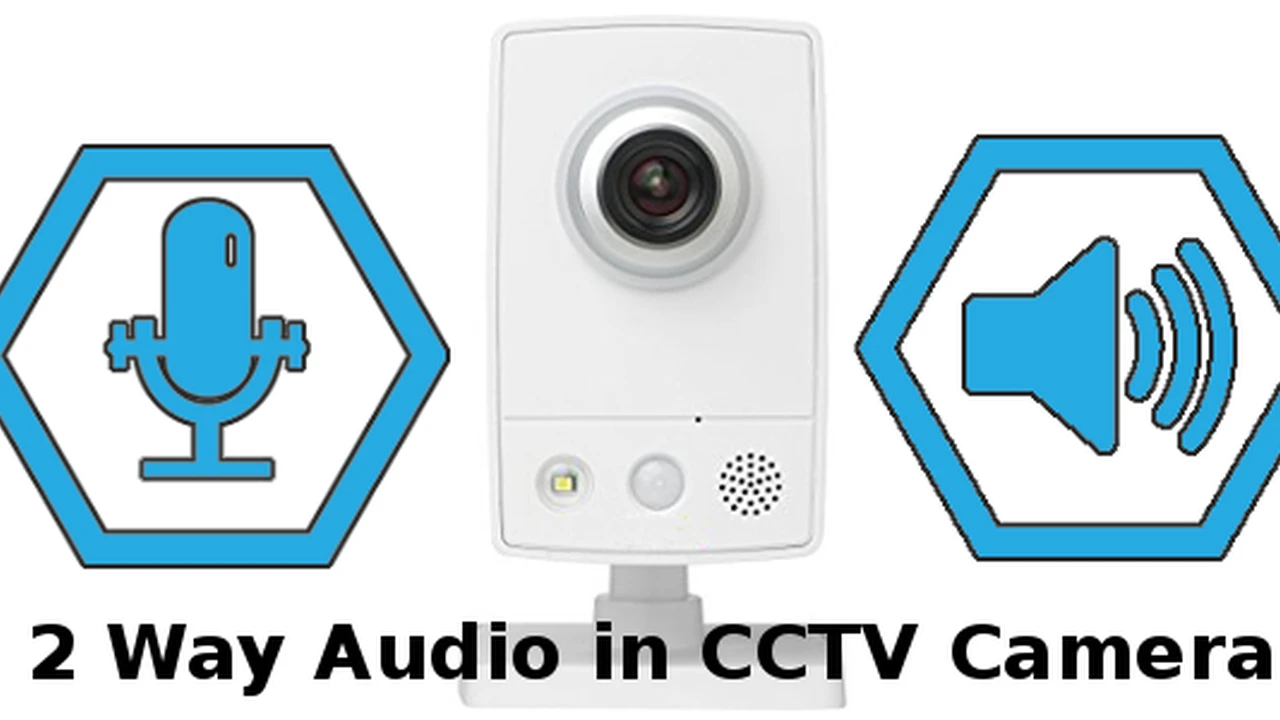
So, how does this magic happen? At its core, two-way audio in CCTV systems involves a microphone and a speaker built right into the camera. When you access your camera's live feed through an app on your smartphone or a web interface, you'll usually see a microphone icon. Tap that, and whatever you say into your phone's mic gets broadcast through the camera's speaker. Similarly, the camera's microphone picks up sounds from its environment, sending them back to your device so you can hear what's going on.
The quality of this audio can vary a lot between different cameras. Some have crystal-clear sound, while others might be a bit muffled. Factors like noise cancellation, speaker volume, and microphone sensitivity all play a role. Many modern cameras also incorporate advanced digital signal processing to reduce echoes and background noise, making conversations much clearer. It's not just about having a mic and speaker; it's about how well they work together to give you a seamless communication experience.
Key Benefits of Two-Way Audio CCTV for Enhanced Security and Convenience
Let's dive into why two-way audio is such a big deal. It's not just a gimmick; it offers some serious advantages:
- Deterrence: This is probably the biggest one. If someone is lurking around your property, a simple verbal warning through the camera can often be enough to send them packing. It's a powerful psychological deterrent.
- Communication: Ever had a delivery person confused about where to leave a package? Or a friend at your door when you're not home? You can talk to them directly, giving instructions or letting them know you'll be right there.
- Monitoring Children and Pets: For parents, it's fantastic for checking in on kids playing in the backyard or seeing what your pets are up to. You can tell your dog to get off the couch or remind your kids to stay away from the street.
- Elderly Care: If you have elderly family members living alone, a two-way audio camera can be a comforting way to check in on them and communicate quickly if needed.
- Employee Management: Business owners can use it to communicate with staff in different areas, provide instructions, or even address customers directly if needed.
- Emergency Response: In an emergency, you can communicate with first responders or provide crucial information about a situation before they even arrive.
- Reduced False Alarms: Sometimes, a motion alert is just a neighbor's cat. With two-way audio, you can quickly assess the situation and avoid unnecessary panic or calls to authorities.
Top 3 CCTV Systems with Two-Way Audio for Home Security
Okay, let's get to some actual product recommendations. These are some of the best options out there right now for homeowners looking for reliable two-way audio CCTV.
1. Arlo Pro 4 Spotlight Camera: Premium Wireless Two-Way Audio Surveillance
The Arlo Pro 4 is a fantastic choice if you're looking for a completely wireless solution with excellent video and audio quality. Arlo has really nailed the user experience, and their two-way audio is top-notch.
- Key Features: 2K HDR video, integrated spotlight, color night vision, 160-degree viewing angle, built-in siren, and of course, clear two-way audio. It's weather-resistant, so you can use it indoors or outdoors.
- Usage Scenarios: Perfect for front doors, backyards, driveways, or even monitoring a baby's room. The spotlight and siren add extra layers of deterrence. You can easily talk to visitors, delivery drivers, or even warn off potential intruders.
- Pros: Completely wireless (battery-powered), easy installation, excellent video quality, reliable two-way audio, smart alerts, integrates well with smart home ecosystems like Alexa and Google Assistant.
- Cons: Battery life can vary depending on usage, requires an Arlo Secure subscription for cloud storage and advanced features (though local storage is an option with an Arlo SmartHub).
- Price Range: Typically around $180 - $200 per camera.
2. Ring Stick Up Cam Battery: Versatile Two-Way Talk and Motion Detection
Ring is a household name in home security, and their Stick Up Cam Battery is a versatile option that offers solid two-way audio capabilities. It's super flexible in terms of placement.
- Key Features: 1080p HD video, motion-activated notifications, infrared night vision, and two-way talk with noise cancellation. It's battery-powered but also has a plug-in option for continuous power.
- Usage Scenarios: Great for monitoring entryways, garages, or even as an indoor camera. Its portability means you can move it around as needed. Use it to greet guests, instruct pet sitters, or simply check in on your home.
- Pros: Easy to install anywhere, good video quality, clear two-way audio, integrates seamlessly with other Ring devices and the Ring app, affordable.
- Cons: Requires a Ring Protect subscription for video recording and sharing, battery changes can be a minor inconvenience if used in high-traffic areas.
- Price Range: Around $99 - $120 per camera.
3. Eufy SoloCam S40: Solar-Powered Two-Way Audio with No Monthly Fees
If you're tired of battery changes and monthly fees, the Eufy SoloCam S40 is a fantastic alternative. It's solar-powered and stores footage locally, making it a very cost-effective long-term solution.
- Key Features: 2K HD video, integrated solar panel for continuous charging, color night vision, 90dB siren, and two-way audio. It has 8GB of local storage, so no subscription needed for recordings.
- Usage Scenarios: Ideal for outdoor placement where it can get direct sunlight, like a backyard, driveway, or side of the house. You can use it to communicate with anyone on your property without worrying about power or cloud storage costs.
- Pros: Solar-powered (virtually maintenance-free), no monthly fees for storage, excellent video quality, good two-way audio, easy DIY installation.
- Cons: Requires direct sunlight for optimal charging, local storage means you need to retrieve the camera or connect to its Wi-Fi for footage if your internet is down.
- Price Range: Approximately $170 - $200 per camera.
Top 3 CCTV Systems with Two-Way Audio for Business Security
Businesses have different needs than homes, often requiring more robust features, wider coverage, and sometimes integration with existing security infrastructure. Here are some top picks for commercial use.
1. Reolink RLC-811A: PoE Two-Way Audio for Reliable Business Surveillance
For businesses that need reliable, wired connections and high-resolution video, the Reolink RLC-811A is a strong contender. Power over Ethernet (PoE) simplifies installation and ensures stable connectivity.
- Key Features: 4K Ultra HD video, 5x optical zoom, smart person/vehicle detection, built-in spotlight and siren, and two-way audio. PoE means a single cable provides both power and data.
- Usage Scenarios: Perfect for monitoring storefronts, warehouses, office entrances, or loading docks. The two-way audio can be used to communicate with delivery personnel, address customers, or deter suspicious activity. The optical zoom is great for detailed surveillance.
- Pros: Super high-resolution video, reliable wired connection (PoE), excellent night vision, smart detection reduces false alarms, local storage via SD card or NVR, no monthly fees for basic features.
- Cons: Requires Ethernet cabling, which might be more complex to install than wireless, two-way audio quality is good but not always as refined as some premium wireless options.
- Price Range: Around $100 - $130 per camera.
2. Hikvision DS-2CD2T87G2-L: ColorVu Two-Way Audio for 24/7 Business Clarity
Hikvision is a giant in the commercial security space, and their ColorVu cameras are renowned for their ability to produce full-color images even in extremely low light. The DS-2CD2T87G2-L combines this with two-way audio.
- Key Features: 8MP (4K) resolution, ColorVu technology for 24/7 color imaging, built-in microphone and speaker for two-way audio, advanced analytics (line crossing, intrusion detection), and H.265+ compression.
- Usage Scenarios: Ideal for retail stores, restaurants, parking lots, or any business environment where clear, color identification is crucial around the clock. Use two-way audio to communicate with staff or address customers directly.
- Pros: Unmatched low-light performance with color images, very high resolution, robust build quality, advanced analytics, reliable two-way audio, integrates well with Hikvision NVRs and VMS.
- Cons: Can be more complex to set up for DIY users, higher price point, some users might have privacy concerns due to the brand's origin (though Hikvision has addressed these with firmware updates and security measures).
- Price Range: Approximately $250 - $350 per camera.
3. Dahua IPC-HFW3849T1-AS-P: WizSense Two-Way Audio for Smart Business Protection
Dahua is another leading brand in professional surveillance, and their WizSense series offers intelligent features at a competitive price point. The IPC-HFW3849T1-AS-P is a great example, combining 4K resolution with smart detection and two-way audio.
- Key Features: 8MP (4K) resolution, WizSense AI for accurate human and vehicle detection, built-in microphone and speaker for two-way audio, SMD Plus (Smart Motion Detection), and IP67 weatherproofing.
- Usage Scenarios: Excellent for perimeter security, warehouse monitoring, or office spaces. The AI features help reduce false alarms, making it more efficient for security personnel. Two-way audio allows for direct interaction with individuals on site.
- Pros: High resolution, very accurate AI detection, good two-way audio, robust and weather-resistant, supports local storage and NVR integration, competitive pricing for its feature set.
- Cons: Similar to Hikvision, setup can be more involved for beginners, requires a good understanding of network configuration for optimal performance.
- Price Range: Around $180 - $250 per camera.
Comparing Two-Way Audio CCTV Systems: What to Look For
When you're trying to pick the perfect two-way audio CCTV system, there are a few key things you should keep in mind. It's not just about the audio; it's about the whole package.
Video Quality and Resolution: Seeing is Believing
Even with great audio, if your video is blurry, you're missing a big piece of the puzzle. Look for cameras with at least 1080p HD resolution. For outdoor use or areas where you need to zoom in on details, 2K or 4K (8MP) cameras are a much better choice. Higher resolution means clearer images, which is crucial for identification.
Audio Clarity and Noise Cancellation: Hear Every Word
This is obviously super important for two-way audio. Some cameras have better microphones and speakers than others. Look for features like noise cancellation or echo reduction. Read reviews specifically mentioning audio quality. You want to be able to understand what people are saying and for them to understand you, even if there's some background noise.
Connectivity: Wired, Wireless, and PoE Options
How the camera connects to your network and power is a big deal. Wireless cameras (Wi-Fi) are super easy to install but rely on a strong Wi-Fi signal and often battery power. Wired cameras (Ethernet) offer more stable connections and often Power over Ethernet (PoE), meaning one cable handles both power and data. PoE is fantastic for businesses or permanent installations where reliability is key. Consider your installation environment and technical comfort level.
Storage Options: Local, Cloud, or Hybrid Solutions
Where does your footage go? Local storage (SD card, NVR/DVR) means you own your data and often avoid monthly fees. Cloud storage offers off-site backup and easy access from anywhere, but usually comes with a subscription. Many systems offer a hybrid approach, giving you the best of both worlds. Think about how much footage you need to store and how you want to access it.
Smart Features and AI Integration: Beyond Basic Detection
Modern CCTV cameras are smart! Look for features like person and vehicle detection, facial recognition, or even pet detection. These AI-powered features help reduce false alarms and ensure you only get alerts for what truly matters. Some cameras also integrate with smart home ecosystems like Alexa or Google Assistant, allowing for voice control or automated actions.
Durability and Weatherproofing: Built to Last
If you're putting cameras outside, they need to withstand the elements. Look for an IP rating (e.g., IP65, IP66, IP67), which indicates resistance to dust and water. A higher number means better protection. You don't want your camera failing after a heavy rainstorm.
Ease of Installation and User Interface: DIY or Professional?
Are you a DIY enthusiast or do you prefer professional installation? Some systems are designed for super easy setup, while others might require a bit more technical know-how. Also, check out the app or software interface. Is it intuitive and easy to navigate? A clunky app can make even the best camera frustrating to use.
Installation and Setup Tips for Two-Way Audio CCTV Systems
Getting your two-way audio CCTV system up and running smoothly is key. Here are some tips to make the process easier and ensure optimal performance.
Strategic Placement for Optimal Audio and Video Coverage
Don't just stick your camera anywhere! Think about what you want to see and hear. For two-way audio, placing the camera near common interaction points like a front door, gate, or service entrance is ideal. Ensure the microphone isn't too close to noisy sources like busy roads or air conditioning units, which can muffle conversations. Also, consider the camera's field of view to capture the most important areas.
Ensuring Stable Network Connectivity for Real-Time Communication
Two-way audio relies heavily on a stable internet connection. For wireless cameras, make sure your Wi-Fi signal is strong at the camera's location. You might need a Wi-Fi extender or mesh system for outdoor cameras. For wired (PoE) cameras, ensure your Ethernet cables are properly installed and your network infrastructure can handle the data load. A weak connection will lead to choppy audio and video delays.
Configuring Audio Settings and Sensitivity
Most cameras allow you to adjust audio settings. You might be able to tweak microphone sensitivity to pick up quieter sounds or reduce background noise. Experiment with these settings to find the sweet spot for your environment. Some apps also let you adjust speaker volume, which is handy for ensuring your voice is heard clearly.
Integrating with Smart Home Ecosystems for Unified Control
If you have a smart home, consider cameras that integrate with your existing ecosystem (Alexa, Google Assistant, Apple HomeKit). This allows for unified control, voice commands, and even automated actions. Imagine saying, 'Alexa, show me the front door camera,' and being able to talk through it directly from your smart display.
Regular Maintenance and Firmware Updates
Like any tech, CCTV cameras need a little love. Regularly clean the camera lens to ensure clear video. Check for and install firmware updates, as these often bring new features, performance improvements, and crucial security patches. For battery-powered cameras, keep an eye on battery levels and have spares ready.
Legal and Privacy Considerations for Two-Way Audio Surveillance
Before you go all out with your new two-way audio CCTV system, it's super important to understand the legal and privacy aspects. This isn't just about being a good neighbor; it's about staying out of trouble.
Understanding Consent Laws for Audio Recording
This is a big one. Laws regarding audio recording vary significantly by location. In many places, it's illegal to record audio without the consent of at least one party involved in the conversation (one-party consent) or, in some stricter states, all parties involved (all-party consent). While video recording in public or semi-public spaces is generally allowed, audio recording is often treated differently. Always check your local and state laws regarding audio surveillance, especially if your cameras are pointed at areas where people might reasonably expect privacy.
Respecting Neighbor Privacy and Property Lines
While it's tempting to get the widest view possible, try to avoid pointing your cameras directly into your neighbors' windows or private yards. Even if it's legal, it's generally not good for neighborly relations. Be mindful of property lines and aim your cameras to cover your own property primarily. If your camera's field of view extends to a public sidewalk or street, that's usually fine, but be aware of how much audio it's picking up from those areas.
Data Security and Protecting Recorded Footage
Your CCTV system is collecting sensitive data. Make sure your system is secure. Use strong, unique passwords for your camera and Wi-Fi network. Enable two-factor authentication if available. If you're using cloud storage, ensure the provider has robust encryption and security protocols. If you're using local storage, consider physical security for your NVR/DVR. You don't want your footage falling into the wrong hands.
Transparency and Notification
In some commercial settings, or even for home use if you have frequent visitors, it might be a good idea to put up signs indicating that audio and video surveillance is in progress. This transparency can help avoid privacy complaints and also acts as an additional deterrent. For businesses, this is often a legal requirement.
By keeping these points in mind, you can enjoy the benefits of two-way audio CCTV while being a responsible and law-abiding user. It's all about finding that balance between security and respect for privacy.
:max_bytes(150000):strip_icc()/277019-baked-pork-chops-with-cream-of-mushroom-soup-DDMFS-beauty-4x3-BG-7505-5762b731cf30447d9cbbbbbf387beafa.jpg)