Legal Compliance for Access Control System Installation
Understand the legal and regulatory compliance requirements for installing and operating access control systems.
Understand the legal and regulatory compliance requirements for installing and operating access control systems.
Legal Compliance for Access Control System Installation
Navigating the Legal Landscape of Access Control Systems
Installing and operating access control systems isn't just about picking the right tech; it's also about playing by the rules. Whether you're securing a small office, a sprawling corporate campus, or even a residential building, there's a maze of legal and regulatory compliance requirements you need to navigate. Ignoring these can lead to hefty fines, legal battles, and a whole lot of headaches. So, let's dive into what you need to know to keep your access control system on the right side of the law, especially for markets in the US and Southeast Asia.Understanding Data Privacy and GDPR Compliance in Access Control
One of the biggest elephants in the room when it comes to access control is data privacy. Think about it: these systems collect a ton of personal information. We're talking names, entry and exit times, and for biometric systems, even fingerprints or facial scans. In the US, while there isn't one overarching federal law like Europe's GDPR, various state laws and industry-specific regulations come into play. For instance, California's CCPA (California Consumer Privacy Act) gives consumers significant rights over their personal data. If your business operates in California or deals with Californian residents' data, you need to be compliant. In Southeast Asia, the landscape is a bit more fragmented but rapidly evolving. Countries like Singapore have the Personal Data Protection Act (PDPA), Malaysia has the Personal Data Protection Act 2010, and Thailand has its own Personal Data Protection Act (PDPA). These laws generally require you to obtain consent before collecting personal data, protect that data, and be transparent about how you use it. For access control, this means clearly informing individuals about what data is being collected, why, and how it's stored and secured. You might need to display notices at entry points or have employees sign consent forms.Key Considerations for Data Privacy in Access Control:
- Consent: Always obtain explicit consent, especially for biometric data.
- Transparency: Clearly communicate your data collection and usage policies.
- Data Minimization: Only collect data that is absolutely necessary for the system's function.
- Data Security: Implement robust security measures to protect collected data from breaches.
- Data Retention: Establish clear policies for how long data is stored and when it's deleted.
- Access Rights: Allow individuals to access, correct, or delete their personal data as required by law.
Workplace Surveillance Laws and Employee Monitoring with Access Control
When you're using access control in a workplace, you're essentially monitoring your employees. This brings up a whole new set of legal considerations. In the US, generally, employers have the right to monitor employees, but there are limits. Employees usually have a reasonable expectation of privacy, especially in non-work areas like restrooms or locker rooms. It's crucial to inform employees about monitoring practices, often through employee handbooks or specific policies. Covert surveillance is generally frowned upon and can lead to legal challenges. In Southeast Asia, similar principles apply. Many countries require employers to inform employees about surveillance. For example, under Singapore's PDPA, organizations must notify individuals about the purposes for which their personal data is being collected, used, or disclosed. This means you can't just install an access control system and start tracking everyone without telling them. Transparency is key to avoiding legal disputes and maintaining employee trust.Best Practices for Employee Monitoring:
- Clear Policies: Develop and communicate clear policies on employee monitoring.
- Legitimate Purpose: Ensure monitoring serves a legitimate business purpose, like security or timekeeping.
- No Covert Surveillance: Avoid hidden cameras or undisclosed tracking.
- Limited Scope: Restrict monitoring to work-related activities and areas.
- Data Protection: Secure employee data collected through access control systems.
Building Codes and Fire Safety Regulations for Access Control Systems
This is a big one, and it's often overlooked until it's too late. Access control systems, especially those that lock doors, can directly impact fire safety and emergency egress. Imagine a fire breaking out and people being trapped because an access-controlled door won't open. Not good, right? That's why building codes and fire safety regulations are incredibly strict about how these systems are implemented. In the US, the International Building Code (IBC) and the National Fire Protection Association (NFPA) codes (like NFPA 101 Life Safety Code) are paramount. These codes dictate things like:- Egress Requirements: Doors in a path of egress must be easily openable from the inside without special knowledge or effort, and without a key or tool. This often means 'fail-safe' mechanisms where doors unlock automatically during a power outage or fire alarm.
- Emergency Release: There must be clear and accessible emergency release buttons or mechanisms near access-controlled doors.
- Integration with Fire Alarms: Access control systems must be integrated with the building's fire alarm system so that all egress doors automatically unlock when the fire alarm sounds.
- Delayed Egress Locks: While some codes allow for delayed egress locks (where a door remains locked for a short period after activation), these come with very specific requirements and limitations.
Essential Fire Safety Compliance Points:
- Fail-Safe Mechanisms: Ensure doors unlock automatically during power failures or fire alarms.
- Emergency Break Glass: Install clearly marked emergency break glass units or push-to-exit buttons.
- Fire Alarm Integration: Seamlessly connect your access control to the building's fire alarm system.
- Regular Testing: Conduct routine tests of the system's emergency functions.
Industry-Specific Regulations and Compliance Standards for Access Control
Beyond general data privacy and building codes, certain industries have their own specific regulatory frameworks that impact access control. If you're in one of these sectors, you'll need to pay extra close attention.Healthcare (HIPAA in the US, various in SEA):
In the US, the Health Insurance Portability and Accountability Act (HIPAA) mandates strict controls over protected health information (PHI). Access control systems in healthcare facilities must ensure that only authorized personnel can access sensitive areas where PHI is stored or discussed. This means robust audit trails, strict user authentication, and physical security measures to prevent unauthorized access to servers and patient records. In Southeast Asia, countries like Singapore (PDPA) and Malaysia (PDPA) also have provisions for sensitive personal data, which would include health information, requiring similar stringent controls.Financial Services (PCI DSS, GLBA in the US, various in SEA):
For financial institutions, compliance is incredibly tight. In the US, the Payment Card Industry Data Security Standard (PCI DSS) applies to any entity that stores, processes, or transmits cardholder data. This often extends to physical access control to server rooms and data centers. The Gramm-Leach-Bliley Act (GLBA) also requires financial institutions to explain their information-sharing practices to their customers and to safeguard sensitive data. In Southeast Asia, central banks and financial regulators in each country impose similar strict requirements on data security and physical access to financial data and infrastructure.Government and Defense (FISMA in the US, various in SEA):
Government facilities and defense contractors often deal with classified or highly sensitive information. In the US, the Federal Information Security Modernization Act (FISMA) requires federal agencies to develop, document, and implement agency-wide information security programs. This includes physical access controls to secure facilities and systems. Similar national security regulations exist across Southeast Asian nations, demanding the highest levels of physical and logical security for government and defense installations.Education (FERPA in the US, various in SEA):
In the US, the Family Educational Rights and Privacy Act (FERPA) protects the privacy of student education records. While primarily about data, physical access control to student records offices or areas where sensitive student information is handled is crucial for compliance. Many Southeast Asian countries have similar educational privacy laws that would necessitate secure access control.Accessibility Standards (ADA in the US, various in SEA)
Don't forget about accessibility! In the US, the Americans with Disabilities Act (ADA) requires that public accommodations and commercial facilities be accessible to people with disabilities. This means your access control system can't create barriers. For example, card readers or keypads need to be installed at an accessible height, and doors should not require excessive force to open. Automatic door openers might be necessary in certain contexts. Many countries in Southeast Asia are also increasingly adopting accessibility standards. For instance, Singapore has the Building and Construction Authority's Code on Accessibility, which includes provisions for accessible entrances and doors. When designing your access control system, always consider how it will impact individuals with mobility impairments, visual impairments, or other disabilities.Product Recommendations and Compliance Features
Let's talk about some real-world products and how they help with compliance. Remember, the best system is one that not only secures your premises but also keeps you out of legal hot water.1. Genetec Security Center (Enterprise-Grade Solution)
* Description: Genetec Security Center is a unified security platform that seamlessly integrates access control, video surveillance (CCTV), automatic license plate recognition (ALPR), and communications. It's a powerhouse for large enterprises and critical infrastructure. * Compliance Features: * Robust Audit Trails: Records every access event, user action, and system change, crucial for demonstrating compliance with data privacy and industry-specific regulations. * Granular Access Permissions: Allows for highly detailed control over who can access what, when, and where, essential for HIPAA, PCI DSS, and government regulations. * Integration with Fire Alarms: Built-in capabilities to integrate with fire alarm systems for automatic door unlocking during emergencies, meeting IBC and NFPA standards. * Data Encryption: Encrypts data at rest and in transit, protecting sensitive personal information. * Scalability: Can adapt to evolving compliance requirements as your organization grows. * Typical Use Cases: Airports, large corporate campuses, government facilities, hospitals, universities. * Estimated Price Range: Starts from tens of thousands of USD for software licenses and hardware, easily scaling into hundreds of thousands or millions for large deployments.2. Brivo Access (Cloud-Based Solution)
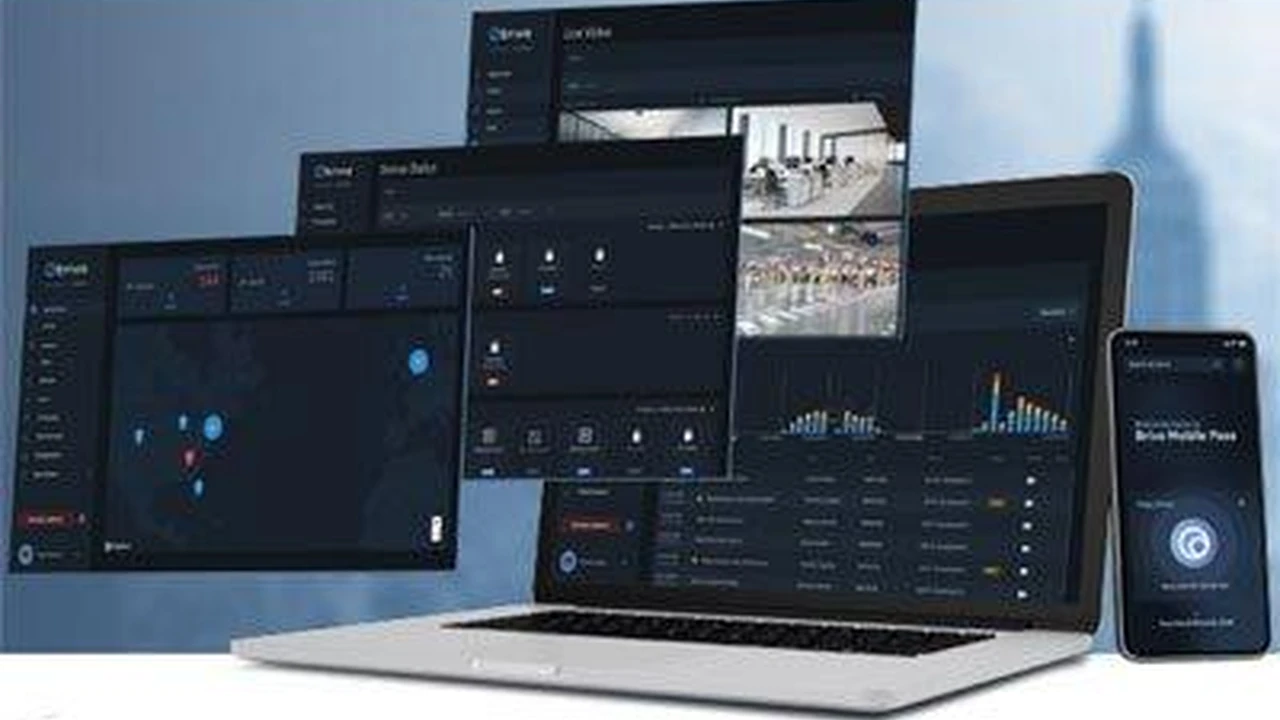
* Description: Brivo offers a leading cloud-based access control system, known for its ease of use, scalability, and mobile management capabilities. It's a great fit for businesses looking for flexibility and remote management. * Compliance Features: * Cloud Security: Brivo's cloud infrastructure is designed with robust security measures, including data encryption and regular security audits, helping with data privacy compliance. * Audit Reporting: Provides comprehensive reporting on access events, user activity, and system changes, useful for demonstrating compliance to auditors. * Mobile Credentials: Supports mobile access, which can be more secure than physical cards and offers better tracking. * Integration Capabilities: Integrates with various video surveillance and alarm systems, allowing for a more unified approach to security and emergency response. * ADA Considerations: Cloud management allows for easy adjustment of access schedules and permissions, which can support accessibility requirements. * Typical Use Cases: Small to medium-sized businesses, multi-tenant office buildings, retail chains, residential communities. * Estimated Price Range: Monthly subscription fees typically range from $50 to $500+, plus hardware costs (readers, controllers) which can be a few thousand USD per door.3. HID Global (Hardware and Software Components)
* Description: HID Global is a giant in the access control world, primarily known for its secure identity solutions, including smart cards, readers, and biometric devices. They also offer software platforms. * Compliance Features: * Secure Credentials: HID's smart cards and mobile credentials use advanced encryption, making them highly secure and resistant to cloning, which is critical for high-security environments. * Biometric Solutions: Their biometric readers (fingerprint, facial recognition) offer strong authentication, but require careful handling of biometric data to comply with privacy laws. * Interoperability: HID products are often designed to be interoperable with various access control software platforms, allowing organizations to build compliant systems with best-of-breed components. * Physical Security: Their robust hardware is designed for durability and tamper resistance, contributing to overall physical security compliance. * Typical Use Cases: Any organization requiring secure physical access, from corporate offices to government facilities, often used in conjunction with other access control software. * Estimated Price Range: Readers can range from $200 to $1000+ each, while cards are a few dollars each. Software platforms vary widely.4. Suprema BioStar 2 (Biometric-Focused Solution)
* Description: Suprema specializes in biometric access control and time & attendance solutions. BioStar 2 is their web-based, open-platform security solution that provides comprehensive functionality for access control, time & attendance, visitor management, and video surveillance. * Compliance Features: * Advanced Biometric Security: Offers highly accurate fingerprint, facial, and iris recognition, providing strong authentication for sensitive areas. * Data Protection for Biometrics: Suprema's systems are designed with features to encrypt and secure biometric templates, addressing critical data privacy concerns related to biometric data. * Audit Trails and Reporting: Comprehensive logging of all access events, including biometric authentication attempts, which is vital for compliance audits. * Integration with Fire Systems: Can be integrated with fire alarm systems to ensure emergency egress compliance. * Customizable Policies: Allows administrators to set detailed access policies based on user groups, time zones, and security levels, supporting various industry regulations. * Typical Use Cases: High-security facilities, data centers, research labs, manufacturing plants, and any environment where strong identity verification is paramount. * Estimated Price Range: Biometric readers can range from $500 to $2000+ per unit, plus software licenses and installation costs.Staying Up-to-Date with Evolving Regulations
The legal and regulatory landscape is constantly shifting. What's compliant today might not be tomorrow. New data privacy laws emerge, building codes are updated, and industry standards evolve. It's not a set-it-and-forget-it situation.Tips for Ongoing Compliance:
- Regular Audits: Conduct periodic internal and external audits of your access control system and its associated policies.
- Legal Counsel: Engage with legal professionals who specialize in data privacy, security, and building codes in your operating regions (US and Southeast Asia).
- Stay Informed: Subscribe to industry newsletters, regulatory updates, and participate in relevant professional organizations.
- Staff Training: Ensure your staff, especially those managing the access control system, are fully trained on compliance requirements and best practices.
- Documentation: Maintain meticulous records of your system's configuration, policies, training, and any incidents or changes.
:max_bytes(150000):strip_icc()/277019-baked-pork-chops-with-cream-of-mushroom-soup-DDMFS-beauty-4x3-BG-7505-5762b731cf30447d9cbbbbbf387beafa.jpg)