Return on Investment for Integrated Security Systems
Understand the financial benefits and return on investment associated with implementing integrated security systems.
Understand the financial benefits and return on investment associated with implementing integrated security systems.
Return on Investment for Integrated Security Systems
Hey there! Thinking about upgrading your security setup? You've probably heard a lot about integrated security systems – those fancy setups that bring together all your security tech, like cameras, access control, and alarms, into one neat package. But let's be real, these systems can be a significant investment. So, the big question on everyone's mind is: what's the return on investment (ROI) for integrated security systems? Is it really worth the money? Let's dive in and break it down, looking at everything from cost savings to enhanced safety and operational efficiency.
Understanding Integrated Security Systems and Their Value Proposition
First off, what exactly are we talking about when we say 'integrated security system'? Imagine having separate systems for your CCTV cameras, your door access, your fire alarms, and maybe even your building management. Each one has its own software, its own monitoring station, and often, its own team to manage it. It's like having a bunch of different apps on your phone that don't talk to each other – a bit clunky, right?
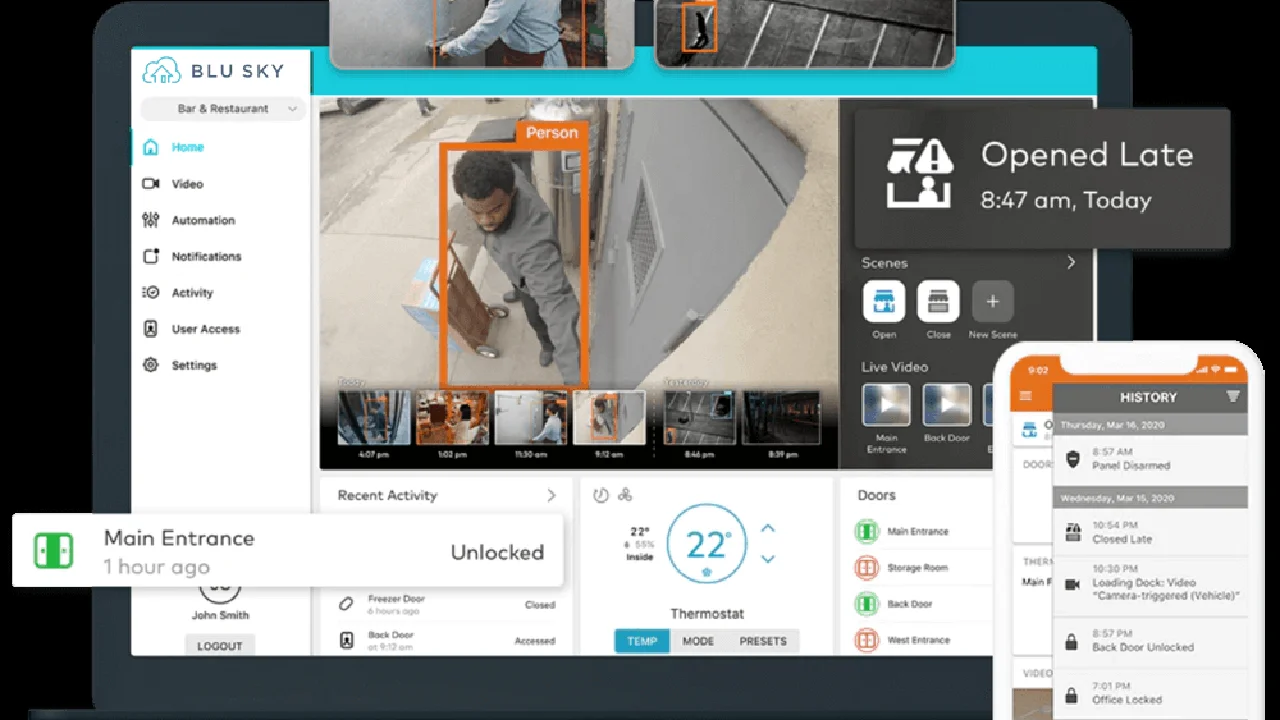
An integrated security system, on the other hand, brings all these disparate elements together under a single, unified platform. This means your security cameras can trigger an alarm if they detect unusual activity, which can then automatically lock certain doors and notify security personnel. It's a symphony of security, rather than a cacophony of individual instruments. The value proposition here is pretty clear: better security, streamlined operations, and often, long-term cost savings.
Direct Financial Benefits and Cost Savings with Integrated Security Solutions
Let's get down to brass tacks: money. How do integrated security systems actually save you cash?
Reduced Manpower and Operational Costs for Security Management
One of the most significant areas for savings is in manpower. With a fragmented system, you might need more security guards or operators to monitor different screens and respond to various alerts. An integrated system, with its centralized monitoring and automated responses, can significantly reduce the need for constant human oversight. For example, instead of having someone manually check every camera feed, the system can alert an operator only when an anomaly is detected. This means fewer personnel needed, or existing personnel can be reallocated to more critical tasks. Think about a large corporate campus or a sprawling industrial facility – the savings here can be substantial.
Lower Maintenance and Support Expenses for Unified Security Platforms
Managing multiple security systems often means dealing with multiple vendors, multiple software licenses, and different maintenance schedules. This can be a logistical nightmare and expensive. An integrated system typically comes from a single vendor or a few closely partnered ones, simplifying maintenance, support, and software updates. You're dealing with one point of contact, one service contract, and often, a more cohesive and less buggy system. This translates to fewer service calls, less downtime, and ultimately, lower overall maintenance costs.
Reduced Insurance Premiums for Enhanced Security Measures
Insurance companies love a good security system. The better your security, the lower your risk of theft, vandalism, or other incidents. Many insurers offer reduced premiums for businesses and even homeowners who implement advanced, integrated security solutions. It's a win-win: you're better protected, and you're paying less for that protection. Make sure to check with your insurance provider about potential discounts when you're considering an upgrade.
Minimizing Losses from Theft and Vandalism with Integrated Surveillance
This one's pretty straightforward. A robust, integrated security system acts as a powerful deterrent. Potential criminals are less likely to target a property that's clearly well-protected. And if an incident does occur, the integrated system's ability to quickly detect, record, and alert can significantly reduce losses. Faster response times mean less damage, less stolen property, and quicker apprehension of culprits. For retail businesses, this can mean a direct impact on their bottom line by reducing shrinkage.
Improved Compliance and Reduced Fines with Centralized Security Data
Many industries have strict regulatory compliance requirements when it comes to security and data protection. Integrated systems often come with advanced reporting and auditing capabilities, making it easier to demonstrate compliance. This can help you avoid hefty fines and legal penalties that can arise from security breaches or non-compliance. Think about healthcare facilities with HIPAA, or financial institutions with their own stringent regulations – integrated systems can be a lifesaver.
Indirect Benefits and Enhanced Value from Integrated Security Solutions
Beyond the direct financial savings, integrated security systems bring a host of indirect benefits that add significant value to your organization or home.
Enhanced Safety and Security for Personnel and Assets
This is perhaps the most obvious, but also the most crucial benefit. An integrated system provides a higher level of security. With all components working together, you get a more comprehensive view of your environment and faster, more coordinated responses to threats. This means a safer environment for your employees, customers, and family, and better protection for your valuable assets. Peace of mind? Priceless.
Increased Operational Efficiency and Streamlined Workflows
When your security systems are integrated, your operations become much smoother. Security personnel can manage everything from a single interface, reducing complexity and improving response times. For example, if a fire alarm goes off, the system can automatically unlock emergency exits, shut down HVAC systems, and display evacuation routes on digital signage, all without human intervention. This kind of automation frees up staff to focus on more critical tasks and ensures a more efficient response to any situation.
Better Data Analytics and Business Intelligence from Unified Security Platforms
Integrated systems generate a wealth of data. By analyzing this data, you can gain valuable insights into traffic patterns, peak hours, common security incidents, and even employee behavior. This business intelligence can be used to optimize staffing, improve facility layout, and identify potential security vulnerabilities before they become major problems. For retail, this could mean understanding customer flow better; for a factory, it could mean optimizing production line security.
Improved Employee and Customer Experience with Seamless Access Control
Think about a modern office building where employees use a single badge or even their smartphone to access different areas, call elevators, and even pay for lunch. This seamless experience, powered by an integrated access control system, improves convenience and efficiency for everyone. For customers, a well-managed and secure environment fosters trust and a positive impression of your business.
Scalability and Future-Proofing Your Security Infrastructure
Integrated systems are typically designed with scalability in mind. As your business grows or your security needs evolve, it's much easier to add new cameras, sensors, or access points to an existing integrated platform than to try and retrofit multiple disparate systems. This future-proofs your investment, ensuring that your security infrastructure can adapt to changing demands without requiring a complete overhaul every few years.
Calculating the ROI for Your Integrated Security System Investment
So, how do you actually put numbers to all this? Calculating ROI involves comparing the costs of the system against the benefits it provides. It's not always a simple equation, especially when you factor in indirect benefits, but here's a framework:
ROI = (Total Benefits - Total Costs) / Total Costs * 100%
Identifying All Costs Associated with Integrated Security Implementation
- Initial Purchase and Installation: This includes hardware (cameras, sensors, access readers, control panels), software licenses, and professional installation fees.
- Training: Costs associated with training your staff to use the new system.
- Ongoing Maintenance and Support: Annual service contracts, software updates, and potential repairs.
- Monitoring Fees: If you opt for professional monitoring services.
- Network Infrastructure Upgrades: Sometimes, an integrated system might require improvements to your existing network.
Quantifying Tangible and Intangible Benefits of Integrated Security
- Reduced Losses: Estimate the financial impact of theft, vandalism, and other security incidents before and after implementation.
- Insurance Savings: Get quotes from your insurer for potential premium reductions.
- Manpower Savings: Calculate the cost savings from reducing security personnel or reallocating their time.
- Operational Efficiency Gains: This can be harder to quantify but consider time saved by staff, faster incident response, and reduced administrative overhead.
- Compliance Avoidance of Fines: Estimate potential fines avoided due to improved compliance.
- Enhanced Reputation and Trust: While hard to put a number on, a secure environment builds trust with employees and customers, which can indirectly impact revenue.
- Peace of Mind: Again, intangible, but a significant benefit for many.
Real-World Examples and Product Recommendations for Integrated Security
Let's look at some real-world scenarios and specific products that exemplify integrated security solutions. Keep in mind that pricing can vary wildly based on the scale of your deployment, specific features, and regional factors.
Small to Medium Business (SMB) Integrated Security Solutions
For SMBs, the focus is often on ease of use, affordability, and scalability. You want something that can grow with you without breaking the bank.
Product Recommendation: Verkada Command Platform
Verkada is a popular choice for SMBs and even larger enterprises due to its cloud-managed approach. It integrates video surveillance, access control, environmental sensors, and alarm monitoring into a single, intuitive platform. You can manage everything from a web browser or mobile app.
- Key Features: Cloud-based video storage, AI-powered analytics (person/vehicle detection), smart access control with mobile credentials, environmental sensors (air quality, vape detection), and integrated alarm monitoring.
- Use Case: A retail store wanting to monitor customer traffic, secure inventory, and manage employee access. A small office needing to track who enters and exits, and have video evidence if something happens.
- Comparison: Compared to traditional on-premise systems, Verkada offers simpler installation, less hardware to maintain (no NVRs/DVRs), and automatic software updates. It's generally more expensive upfront than basic DIY systems but offers a more robust and integrated experience.
- Estimated Cost: A basic setup for a small office (e.g., 4 cameras, 2 access control doors) could range from $5,000 - $15,000 for hardware and installation, plus annual cloud licensing fees starting from a few hundred to a few thousand dollars depending on the number of devices and features.
Product Recommendation: Rhombus Systems
Similar to Verkada, Rhombus Systems offers a cloud-managed physical security platform that integrates video surveillance, access control, and IoT sensors. It's known for its user-friendly interface and strong analytics capabilities.
- Key Features: AI-powered video analytics, cloud archiving, smart access control, license plate recognition, and integration with various third-party systems.
- Use Case: A school district looking for a unified platform to manage security across multiple buildings, including visitor management and emergency response. A warehouse needing to monitor large areas and control access points.
- Comparison: Rhombus competes directly with Verkada, often offering similar features with slight differences in pricing models and specific integrations. Both are excellent choices for cloud-first integrated security.
- Estimated Cost: Comparable to Verkada, a small to medium deployment might see hardware and installation costs in the $4,000 - $12,000 range, with recurring cloud service fees.
Enterprise-Level Integrated Security Solutions
For large organizations, universities, or critical infrastructure, the demands are much higher. These systems need to handle thousands of devices, complex integrations, and often, mission-critical operations.
Product Recommendation: Genetec Security Center
Genetec is a powerhouse in the integrated security world. Their Security Center platform unifies IP video surveillance (VMS), access control, automatic license plate recognition (ALPR), and communications management into a single, comprehensive solution. It's highly scalable and customizable.
- Key Features: Unified VMS and access control, advanced analytics, federated systems for multi-site management, cybersecurity hardened, and extensive third-party integrations.
- Use Case: A large airport needing to manage thousands of cameras, control access to secure areas, and integrate with emergency response systems. A city-wide surveillance project.
- Comparison: Genetec is often compared to other enterprise solutions like LenelS2 or Johnson Controls. It's known for its open architecture, allowing for greater flexibility in hardware choices, but requires more specialized expertise for installation and management.
- Estimated Cost: This is where things get really variable. An enterprise deployment can easily run into hundreds of thousands or even millions of dollars, depending on the scale, number of devices, and customization. Software licenses alone can be tens of thousands annually.
Product Recommendation: LenelS2 OnGuard
LenelS2's OnGuard platform is another leading enterprise solution, particularly strong in access control but also offering robust video management and alarm monitoring capabilities. It's widely used in government, corporate, and critical infrastructure sectors.
- Key Features: Powerful access control, visitor management, video management, alarm monitoring, identity management, and integration with HR systems.
- Use Case: A large corporate headquarters needing stringent access control for employees and visitors, integration with their HR database, and comprehensive video surveillance. A government facility with high-security requirements.
- Comparison: LenelS2 is often chosen for its strong access control features and reliability in large, complex environments. It's a more closed system compared to Genetec, often requiring LenelS2 hardware, but offers deep integration within its ecosystem.
- Estimated Cost: Similar to Genetec, enterprise deployments are highly customized and can range from hundreds of thousands to millions.
Home Integrated Security Solutions
Even for homes, integration is becoming more common, especially with the rise of smart home technology.
Product Recommendation: Ring Alarm Pro with Eero Wi-Fi 6 Router
Ring, known for its video doorbells and cameras, offers an integrated alarm system that can be combined with their cameras and even a built-in Eero Wi-Fi 6 router for a more connected home security experience.
- Key Features: DIY installation, professional monitoring option, integration with Ring cameras and smart locks, cellular and battery backup, and a built-in Eero router for network stability.
- Use Case: A homeowner wanting a comprehensive, easy-to-install security system that integrates cameras, door/window sensors, and motion detectors, all managed from a single app.
- Comparison: Compared to traditional alarm systems, Ring offers more smart home integration and DIY flexibility. It's generally more affordable than professionally installed systems like ADT but might not offer the same level of customization or enterprise-grade features.
- Estimated Cost: A starter kit can be around $250-$350, with additional sensors and cameras costing $20-$100 each. Professional monitoring is typically around $20-$30 per month.
Product Recommendation: Abode Security System
Abode offers a DIY-friendly smart home security system that integrates with a wide range of smart home devices, including Z-Wave, Zigbee, and HomeKit. It's known for its flexibility and open platform.
- Key Features: DIY installation, professional monitoring options, extensive third-party smart home device integration, home automation rules, and a variety of sensors.
- Use Case: A tech-savvy homeowner who wants to build a highly customized smart home security system that integrates with their existing smart lights, thermostats, and other devices.
- Comparison: Abode offers more flexibility in terms of smart home integration than Ring, making it a good choice for those who want to build a truly interconnected smart home. It's also generally more affordable than professionally installed systems.
- Estimated Cost: Starter kits range from $150-$300, with additional sensors and devices costing $30-$80 each. Professional monitoring plans are available for around $20-$35 per month.
Key Considerations When Investing in Integrated Security Systems
Before you jump in, here are a few things to keep in mind:
Scalability and Future Growth Planning for Your Security Infrastructure
Think about where your business or home will be in 5 or 10 years. Will the system you choose today be able to grow with you? Can you easily add more cameras, doors, or sensors without having to rip everything out and start over? This is crucial for long-term ROI.
Vendor Reputation and Support for Integrated Security Solutions
Who are you buying from? A reputable vendor with a strong track record of customer support and ongoing product development is essential. You don't want to be stuck with a system that's no longer supported or that you can't get help with when things go wrong.
Cybersecurity and Data Privacy in Integrated Security Systems
Integrated systems collect a lot of data. How is that data protected? What are the vendor's policies on data privacy and cybersecurity? With everything connected to the internet, robust cybersecurity measures are non-negotiable to protect against hacking and data breaches.
Ease of Use and Training Requirements for Security Personnel
A powerful system is useless if your team can't figure out how to use it. Look for systems with intuitive interfaces and ensure adequate training is provided. The easier it is to use, the more effectively your team can leverage its capabilities.
Integration Capabilities with Existing Business Systems
Do you need your security system to talk to your HR system, your building management system, or your IT infrastructure? Ensure the integrated security solution you choose has the necessary APIs and integration capabilities to connect with your other critical business systems.
So, is an integrated security system worth the investment? Absolutely. While the upfront costs can seem daunting, the long-term financial benefits, coupled with enhanced safety, operational efficiency, and peace of mind, make a compelling case. By carefully evaluating your needs, calculating the potential ROI, and choosing the right system and vendor, you can make a smart investment that pays dividends for years to come. It's not just about buying security equipment; it's about investing in a safer, more efficient, and more resilient future.
:max_bytes(150000):strip_icc()/277019-baked-pork-chops-with-cream-of-mushroom-soup-DDMFS-beauty-4x3-BG-7505-5762b731cf30447d9cbbbbbf387beafa.jpg)