The Role of AI in Modern CCTV Surveillance
An in-depth look at how artificial intelligence is transforming CCTV surveillance with smart analytics and recognition.
An in-depth look at how artificial intelligence is transforming CCTV surveillance with smart analytics and recognition.
The Role of AI in Modern CCTV Surveillance
Hey there, security enthusiasts and curious minds! Let's dive deep into something truly revolutionary that's changing the game in how we keep our homes and businesses safe: Artificial Intelligence (AI) in modern CCTV surveillance. Gone are the days when CCTV was just about recording grainy footage for later review. Today, thanks to AI, our surveillance systems are becoming smarter, more proactive, and incredibly efficient. It's not just about catching bad guys anymore; it's about preventing incidents, optimizing operations, and providing insights that were once unimaginable.
Think about it. Traditional CCTV systems, while useful, often required a human operator to constantly monitor multiple screens, a task that's prone to fatigue and error. AI steps in as the ultimate assistant, capable of processing vast amounts of visual data at speeds and accuracies no human can match. This isn't science fiction; it's happening right now, making our security systems more robust and reliable than ever before. So, let's break down what AI brings to the table in the world of CCTV surveillance.
Understanding AI Powered CCTV Surveillance Systems
When we talk about AI in CCTV, we're essentially talking about systems that can 'see,' 'understand,' and 'learn' from video feeds. This goes way beyond simple motion detection. AI-powered CCTV surveillance systems use advanced algorithms, often based on machine learning and deep learning, to analyze video streams in real-time. They can identify objects, recognize faces, detect unusual behaviors, and even predict potential threats. It's like giving your security cameras a brain!
The core idea is to move from reactive security (reviewing footage after an event) to proactive security (identifying and alerting to potential threats as they happen, or even before). This shift is monumental, allowing for quicker response times and potentially preventing incidents from escalating. Imagine a system that not only tells you someone is on your property but also identifies them as an unknown individual loitering suspiciously, rather than just a delivery driver. That's the power of AI.
Key AI Features and Capabilities in CCTV Cameras
AI brings a whole host of incredible features to CCTV. Let's explore some of the most impactful ones:
Advanced Video Analytics and Smart Detection
This is where AI truly shines. Instead of just detecting any movement, AI-powered video analytics can differentiate between various types of movement and objects. For example, it can tell the difference between a falling leaf, a stray animal, and a human intruder. This drastically reduces false alarms, which is a huge pain point for many traditional security systems.
- Object Detection and Classification: AI can identify and classify objects like people, vehicles (cars, trucks, motorcycles), and even specific types of bags or packages. This is crucial for targeted alerts.
- Line Crossing and Intrusion Detection: You can set virtual boundaries or lines, and the system will alert you if someone crosses them in a specific direction or enters a restricted area.
- Loitering Detection: AI can identify individuals or vehicles that remain in a specific area for an unusual amount of time, signaling potential suspicious activity.
- Abandoned Object Detection: If a package or object is left unattended in a sensitive area for too long, the system can flag it, which is vital for public safety and counter-terrorism efforts.
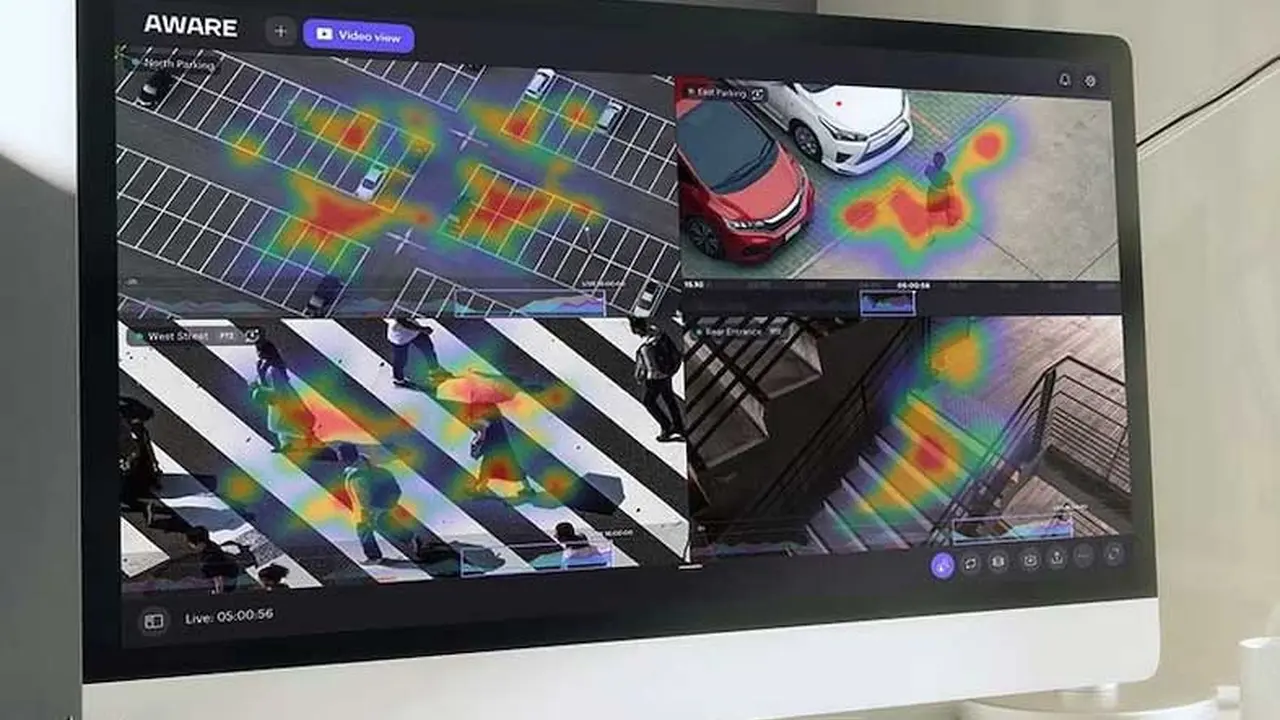
- Crowd Detection and Management: In large venues, AI can monitor crowd density and movement, alerting staff to potential bottlenecks or dangerous surges.
Facial Recognition and People Counting
Facial recognition is perhaps one of the most talked-about AI features. While it raises privacy concerns, its applications in security are undeniable. It can identify known individuals (employees, VIPs) and flag unknown or blacklisted individuals. People counting, on the other hand, is less about individual identity and more about numbers, useful for occupancy management and retail analytics.
- Access Control Integration: Facial recognition can be integrated with access control systems, allowing authorized personnel to enter without needing cards or keys.
- Watchlist Alerts: If a person on a predefined watchlist (e.g., known shoplifters, persons of interest) is detected, the system can immediately alert security personnel.
- Occupancy Monitoring: For businesses, this helps manage capacity limits, especially relevant in health-conscious environments.
- Retail Analytics: Understanding foot traffic patterns, popular areas, and conversion rates can be invaluable for retail businesses.
License Plate Recognition LPR for Vehicle Monitoring
LPR technology uses AI to read and record license plates, providing a powerful tool for vehicle access control, parking management, and law enforcement. It's incredibly accurate and works in various lighting conditions.
- Automated Gate Access: Only authorized vehicles with recognized license plates can enter a property.
- Parking Management: Monitors parking duration, identifies unauthorized parking, and helps manage parking spaces efficiently.
- Stolen Vehicle Detection: Can be integrated with databases to alert authorities if a stolen vehicle is detected.
Behavioral Analysis and Anomaly Detection
This is where AI goes beyond simple identification and starts to 'understand' context. Behavioral analysis can detect unusual patterns or anomalies that might indicate a problem.
- Unusual Movement Patterns: Someone running in an area where people usually walk, or lingering in a restricted zone.
- Fighting or Aggression Detection: AI can be trained to recognize body language and movements associated with altercations.
- Fall Detection: Particularly useful in elder care facilities or industrial environments, alerting if someone has fallen and might need assistance.
Benefits of AI in Modern CCTV Surveillance Systems
The integration of AI into CCTV surveillance brings a multitude of benefits, transforming security from a reactive measure to a proactive and intelligent system.
Enhanced Accuracy and Reduced False Alarms
This is a game-changer. Traditional motion detection often triggers alerts for anything from a shadow to a small animal. AI's ability to differentiate and classify objects drastically reduces these false alarms, meaning security personnel aren't constantly responding to non-threats. This saves time, resources, and prevents alert fatigue, ensuring that when an alarm does go off, it's likely a genuine threat.
Proactive Threat Detection and Prevention
Instead of just recording a crime, AI helps prevent it. By detecting suspicious behavior, loitering, or unauthorized access in real-time, security teams can intervene before an incident occurs. This proactive approach is invaluable for protecting assets, people, and property.
Improved Operational Efficiency and Cost Savings
AI automates many tasks that previously required human intervention. This means fewer personnel are needed for constant monitoring, allowing them to focus on higher-level security tasks or respond to actual threats. The reduction in false alarms also means less wasted time and resources. Over time, this translates into significant cost savings for businesses and organizations.
Valuable Business Intelligence and Insights
Beyond security, AI-powered CCTV can provide incredible business intelligence. For retail, it can track customer flow, popular product displays, and peak hours. For facilities management, it can monitor occupancy, optimize staffing, and identify areas needing attention. This data can be used to improve customer experience, optimize operations, and boost profitability.
Scalability and Future Proofing Your Security
AI systems are often highly scalable, meaning you can expand your surveillance network and add more cameras without necessarily needing a proportional increase in monitoring staff. Furthermore, as AI technology evolves, many systems can be updated with new algorithms and features, ensuring your security infrastructure remains cutting-edge and future-proof.
Top AI Powered CCTV Surveillance Products and Solutions
Let's talk about some real-world examples. The market is booming with innovative AI-powered CCTV solutions. Here are a few notable players and their offerings, keeping in mind that prices can vary wildly based on features, number of cameras, and installation complexity.
1. Axis Communications with AXIS Camera Station and Analytics
Axis is a giant in the network video industry, and their AI capabilities are top-notch. They offer a range of intelligent cameras and video management software (VMS) that integrate powerful analytics.
- Key Features: AXIS Object Analytics for precise object classification (humans, vehicles), AXIS Guard Suite for intrusion detection, and integration with third-party AI applications. Their cameras often have built-in AI chips for edge processing, reducing server load.
- Use Cases: Ideal for large enterprises, critical infrastructure, and smart city projects where high reliability and advanced analytics are crucial. Think airports, train stations, and large corporate campuses.
- Comparison: Known for robust hardware and open platform approach, allowing for extensive customization and integration. Generally considered premium, with higher upfront costs but excellent long-term reliability.
- Estimated Price Range: Individual AI-enabled cameras can range from $500 to $3000+. Software licenses and server infrastructure add significantly to the total cost, potentially reaching tens of thousands for a comprehensive system.
2. Hanwha Vision (formerly Hanwha Techwin) with Wisenet AI Cameras
Hanwha Vision has made significant strides in integrating AI directly into their Wisenet cameras, offering powerful analytics at the edge.
- Key Features: Wisenet AI cameras feature deep learning-based analytics for accurate object detection (person, face, vehicle, license plate), attribute extraction (age, gender, clothing color), and best-shot capture. They also offer sound classification (e.g., gunshots, screams, broken glass).
- Use Cases: Excellent for retail environments (customer analytics, queue management), schools (safety, access control), and small to medium businesses looking for advanced features without overly complex setup.
- Comparison: Offers a strong balance between performance and cost. Their edge AI processing is a big plus, reducing the need for powerful central servers.
- Estimated Price Range: AI-enabled Wisenet cameras typically range from $400 to $1500. VMS and NVRs are additional, with a mid-sized system potentially costing a few thousand dollars.
3. Verkada Command Platform with AI Analytics
Verkada offers a cloud-managed security platform that integrates cameras, access control, and environmental sensors, all powered by AI.
- Key Features: Cloud-based video storage and management, person and vehicle analytics, facial recognition (with privacy controls), license plate recognition, and occupancy management. Their platform is known for its ease of use and seamless integration.
- Use Cases: Popular with businesses of all sizes, especially those with multiple locations, as it offers centralized management and remote access. Ideal for offices, warehouses, and retail chains.
- Comparison: A fully integrated, cloud-first solution. While it offers incredible convenience and powerful AI, it typically comes with a subscription model, which can be a recurring cost.
- Estimated Price Range: Cameras can range from $600 to $2000+, plus a mandatory annual subscription fee per camera, which can be several hundred dollars per year. Total cost over several years can be substantial but includes all software and support.
4. Dahua Technology with WizSense and WizMind Series
Dahua is another major player, offering a wide range of AI-powered cameras and recorders under their WizSense (entry-level AI) and WizMind (advanced AI) series.
- Key Features: WizSense offers accurate human and vehicle detection, SMD Plus (Smart Motion Detection), and AI coding for efficient storage. WizMind adds advanced features like facial recognition, ANPR (Automatic Number Plate Recognition), people counting, and heat mapping.
- Use Cases: Versatile for various applications, from residential and small business (WizSense) to large commercial and industrial projects (WizMind). Good for those looking for a comprehensive solution at competitive prices.
- Comparison: Offers a broad spectrum of AI features across different price points. Known for good value and extensive product lines.
- Estimated Price Range: WizSense cameras can start from $150-$300, while WizMind cameras can go from $400 to $1000+. NVRs and VMS are separate, with a complete system for a medium-sized business potentially costing a few thousand dollars.
5. Hikvision AcuSense and DeepinView Cameras
Hikvision, like Dahua, is a global leader in surveillance and offers powerful AI solutions through its AcuSense and DeepinView product lines.
- Key Features: AcuSense focuses on accurate human and vehicle detection, reducing false alarms. DeepinView cameras offer more advanced deep learning algorithms for facial recognition, ANPR, people counting, and perimeter protection.
- Use Cases: Suitable for a wide range of applications, from home security to large-scale commercial and public safety projects. Their extensive product range means there's usually a solution for every need.
- Comparison: Similar to Dahua in offering a wide range of AI features at competitive prices. Both are known for their extensive R&D in AI.
- Estimated Price Range: AcuSense cameras can start from $150-$350, and DeepinView cameras from $400 to $1200+. NVRs and VMS are additional, with a complete system for a medium-sized business potentially costing a few thousand dollars.
When considering these products, remember to factor in not just the camera cost but also the NVR/VMS, storage, installation, and any recurring subscription fees for cloud services or advanced analytics. It's always a good idea to get quotes from multiple vendors and consider your specific needs and budget.
Challenges and Considerations for AI in CCTV
While AI in CCTV is incredibly powerful, it's not without its challenges and important considerations.
Data Privacy and Ethical Concerns with Facial Recognition
This is a big one. The ability of AI to identify individuals raises significant privacy concerns. Regulations like GDPR in Europe and various state laws in the US are addressing this. Businesses need to be transparent about their use of facial recognition and ensure they comply with all relevant laws. Ethical deployment means balancing security needs with individual privacy rights.
System Complexity and Integration Challenges
Implementing an advanced AI-powered CCTV system can be complex. It requires careful planning, proper network infrastructure, and often integration with existing security systems (access control, alarm systems). Choosing the right vendor and installer is crucial to ensure seamless operation.
Cost of Implementation and Maintenance
While AI can lead to long-term cost savings, the initial investment can be higher than traditional CCTV. This includes the cost of AI-enabled cameras, powerful NVRs or cloud subscriptions, and potentially specialized software. Ongoing maintenance, software updates, and data storage also need to be factored into the budget.
Accuracy Limitations and Bias in AI Algorithms
AI is only as good as the data it's trained on. Biases in training data can lead to inaccuracies, especially in facial recognition across different demographics. Environmental factors like poor lighting, extreme weather, or obstructions can also affect AI's performance. It's important to understand these limitations and not rely solely on AI without human oversight.
The Future of AI in CCTV Surveillance Technology
The future of AI in CCTV is incredibly exciting and promises even more sophisticated capabilities. We're just scratching the surface of what's possible.
Predictive Analytics and Proactive Security
Imagine a system that can not only detect suspicious behavior but also predict potential incidents based on patterns and environmental factors. AI will move towards even more advanced predictive analytics, allowing security teams to intervene before a threat fully materializes. This could involve analyzing crowd dynamics to predict stampedes or identifying unusual vehicle patterns that precede a break-in.
Edge AI and Decentralized Processing
More and more AI processing will happen directly on the camera (at the 'edge'), rather than requiring powerful central servers. This reduces latency, improves privacy (less data needs to be sent to the cloud), and makes systems more resilient. Edge AI will enable faster, more localized decision-making.
Integration with IoT and Smart City Initiatives
AI-powered CCTV will become an integral part of broader Internet of Things (IoT) ecosystems and smart city initiatives. Imagine cameras communicating with smart streetlights, traffic signals, and environmental sensors to create a truly intelligent and responsive urban environment. This integration will enhance public safety, optimize traffic flow, and improve resource management.
Enhanced Privacy Preserving AI Techniques
As AI becomes more pervasive, there will be a greater focus on developing privacy-preserving AI techniques. This includes technologies like anonymization, differential privacy, and federated learning, which allow AI to extract insights from data without compromising individual identities. This will be crucial for widespread adoption and public acceptance.
AI for Forensic Analysis and Incident Reconstruction
Beyond real-time monitoring, AI will revolutionize forensic analysis. It will be able to quickly sift through hours of footage, identify key events, track individuals or vehicles across multiple cameras, and reconstruct incidents with incredible detail. This will significantly speed up investigations and provide clearer evidence.
So, there you have it. AI is not just an add-on to CCTV; it's fundamentally reshaping how we approach security. From reducing false alarms to predicting threats and providing invaluable business insights, AI-powered surveillance is making our world a safer and smarter place. It's a dynamic field, constantly evolving, and it's definitely something to keep an eye on!
:max_bytes(150000):strip_icc()/277019-baked-pork-chops-with-cream-of-mushroom-soup-DDMFS-beauty-4x3-BG-7505-5762b731cf30447d9cbbbbbf387beafa.jpg)